
For entrepreneurs and investors looking for a way to live and work legally in the U.S., the E-2 Treaty Investor Visa offers a unique opportunity. Unlike other work visas that require sponsorship by an employer, the E-2 allows investors to create, own, and operate their own business while enjoying legal residence in the U.S. For many, it also serves as a strategic bridge while waiting for an EB-3 visa and Green Card, allowing individuals and their families to settle in the country and start generating income legally.

Whether you are from Spain, Japan, Korea, or hold dual nationality from a treaty country while originating from a non-treaty country like Brazil, the E-2 visa can open doors to new professional and personal opportunities and allow you to live and work legally in the U.S. In this guide, we’ll explore everything you need to know about the E-2 visa, including eligibility, investment options, the application process, and tips to maximize your chances of approval.
What is the E-2 Treaty Investor Visa?
The E-2 visa is a nonimmigrant classification that allows nationals of treaty countries to live and work legally in the U.S. by making a substantial investment in a bona fide business. The United States maintains treaties of commerce and navigation with specific countries, allowing their citizens to take advantage of this visa and enjoy the benefits of legal residence and employment.
To qualify for an E-2 visa, the investor must:
- Be a national of a treaty country.
- Have invested, or be actively investing, a substantial amount of capital in a legitimate U.S. business.
- Enter the U.S. solely to develop and direct the investment enterprise, demonstrating operational control or majority ownership.
The E-2 visa is not limited to investors themselves. Certain employees of the business may also qualify if they possess essential skills or managerial responsibilities. Moreover, spouses and dependent children can accompany the investor, allowing families to live and work legally in the U.S., with spouses often eligible to work and children able to attend school.
Who Can Apply: Treaty Countries and Dual Nationality
The E-2 visa is available only to nationals of countries that have a treaty of commerce and navigation with the United States. This includes over 80 countries worldwide. Brazilian nationals are not directly eligible, but those holding dual nationality from a treaty country can apply using that nationality and live and work legally in the U.S. For example, a Brazilian with Italian or Spanish citizenship can apply for an E-2 visa.
Full List of E‑2 Treaty Countries
The following countries currently have E‑2 treaties with the U.S., allowing their nationals to apply for the visa:
Albania, Argentina, Armenia, Australia, Austria, Azerbaijan, Bahrain, Bangladesh, Belgium, Bolivia, Bosnia and Herzegovina, Brunei, Bulgaria, Cameroon, Canada, Chile, China (Taiwan), Colombia, Congo (Brazzaville), Congo (Kinshasa), Costa Rica, Croatia, Czech Republic, Denmark, Ecuador, Egypt, Estonia, Ethiopia, Finland, France, Georgia, Germany, Greece, Grenada, Honduras, Ireland, Israel, Italy, Jamaica, Japan, Jordan, Kazakhstan, Korea (South), Kosovo, Kyrgyzstan, Latvia, Liberia, Lithuania, Luxembourg, Macedonia, Mexico, Moldova, Mongolia, Montenegro, Morocco, Netherlands, New Zealand, Norway, Oman, Pakistan, Panama, Paraguay, Philippines, Poland, Portugal, Romania, Senegal, Serbia, Singapore, Slovak Republic, Slovenia, Spain, Sri Lanka, Suriname, Sweden, Switzerland, Thailand, Togo, Trinidad & Tobago, Tunisia, Turkey, Ukraine, United Kingdom, Yugoslavia (successor states remain bound by treaty).
Source: USCIS – E‑2 Treaty Investors
Key Points About Dual Nationality
- Nationals of countries not on this list, including Brazil, cannot apply directly.
- Dual nationals can use a qualifying citizenship from any treaty country to apply.
- For example, a Brazilian investor with Italian, Spanish, or Portuguese citizenship can apply under the E‑2 visa framework.
This dual nationality provision opens doors for many aspiring entrepreneurs to live and work legally in the U.S. while waiting for other immigration pathways, like an EB-3 visa, to secure permanent residency.
Dual Nationality and Non-Treaty Countries
Countries like Brazil are not treaty countries, which could make E-2 eligibility seem out of reach. However, if a Brazilian investor holds a second nationality from a treaty country (e.g., Spain, Italy, Portugal), they can apply using that nationality and live and work legally in the U.S.
This dual nationality option is a powerful tool for Latin American and global investors who want access to U.S. markets without waiting for other visa pathways. It’s especially useful for individuals exploring EB-3 visas but needing legal status to reside and live and work legally in the U.S. while their application processes are underway.
Why the E-2 Visa Is a Smart Way to Live and Work Legally in the U.S.?
There are several advantages to pursuing an E-2 visa:
1. Live and Work Legally in the U.S.
Unlike tourist or short-term business visas, the E-2 visa allows investors and their families to live and work legally in the U.S., providing the stability to run a business, generate income, and integrate into local communities.
2. Flexibility While Waiting for EB-3 or Other Long-Term Visas
Many investors are also exploring EB-3 visa options to obtain permanent residency (Green Card). The E-2 visa is an excellent pathway to live and work legally in the U.S. while your EB-3 case progresses.
3. Family Benefits
Spouses can apply for work authorization, and dependent children can attend school. This makes the E-2 a family-friendly visa option, enabling the entire household to settle and participate in American life.
4. Entrepreneurial Freedom
The E-2 visa empowers investors to create and manage their own businesses. Popular sectors include restaurants, cafes, retail stores, small service businesses, and franchises. This visa allows investors to live and work legally in the U.S. while implementing their vision and generating profits in the U.S. market.
5. Strategic Investment Opportunities
Certain U.S. industries, particularly in food, hospitality, and franchise-based businesses, are ideal for E-2 investors. For instance, opening a cafe or small restaurant provides a tangible business with growth potential, while also offering opportunities to employ family members or essential staff.
Typical Investments for E-2 Visa Applicants
The E-2 visa requires a substantial investment in a bona fide enterprise. Here’s what that typically looks like:
- Substantial Investment: While there’s no fixed dollar amount, the investment must be enough to ensure your financial commitment to the business and support its successful operation, allowing you to live and work legally in the U.S. Smaller businesses generally require proportionally higher investments to be considered substantial. For cafes or small restaurants, this may range between $100,000 to $250,000, depending on location and operating costs.
- Bona Fide Enterprise: The business must be real, active, and operational, producing goods or services for profit. Passive or speculative investments, such as buying real estate without an active business, generally do not qualify.
- Operational Control: Investors must demonstrate that they develop and direct the enterprise, either through majority ownership (50% or more) or by occupying a managerial role with operational control, ensuring they can live and work legally in the U.S. while running their business.

Restaurants and cafes are particularly suitable for E-2 investments because they allow investors to live and work legally in the U.S. while being actively involved in daily operations, offer a tangible service to the community, and have a clear revenue stream that can be documented for the visa application.
Step-by-Step Process for Applying
Here’s an overview of the E-2 visa process:
- Determine Eligibility: Confirm that you hold nationality from a treaty country, either directly or via dual nationality.
- Choose Your Investment: Identify a business to invest in, such as a restaurant, cafe, or franchise. Ensure the investment is substantial and operational, giving you the ability to live and work legally in the U.S. while running it.
- Prepare Documentation: Compile proof of nationality, investment capital, business plan, and operational control. This includes bank statements, contracts, and company formation documents.
- File Form I-129 or Consulate Application:
- If applying from within the U.S., file Form I-129 (Petition for Nonimmigrant Worker) with USCIS.
- If outside the U.S., apply at the nearest U.S. consulate or embassy.
- Interview: Some applicants may be required to attend a consulate interview to verify the legitimacy of the investment.
- Family Inclusion: Spouses and dependent children can apply concurrently. Spouses may request work authorization.
Top Investment Opportunities for E-2 Visa Applicants
Small businesses, particularly in food and hospitality, are popular choices for E-2 investors who want to live and work legally in the U.S. Here’s why:
- High Community Visibility: Restaurants and cafes become central parts of local communities, providing reliable revenue streams that support your ability to live and work legally in the U.S.
- Operational Control: Investors can actively manage daily operations, satisfying the E-2 requirement for directing the enterprise.
- Scalability: Starting small allows growth and potential expansion into multiple locations or franchises, creating long-term opportunities to live and work legally in the U.S.
- Family Involvement: E-2 visa regulations allow certain employees or family members to work in the business, providing flexibility for household participation while everyone can live and work legally in the U.S.

Working With Global Bridge
Investing in a U.S. business as an E-2 visa applicant can be complex. From selecting the right sector to preparing documentation, professional guidance is crucial.
Global Bridge assists investors by:
- Identifying U.S. business opportunities that qualify for E-2 visas.
- Guiding investors through the documentation and legal requirements.
- Providing insights on restaurant, cafe, and franchise options tailored to your goals.
- Helping dual-nationality investors from countries like Brazil navigate eligibility.
By partnering with experts, investors increase their chances of approval while reducing potential legal pitfalls.
Tips for a Successful E-2 Application
- Choose a Business Wisely: Restaurants, cafes, and small service enterprises are excellent options for operational control and visibility.
- Document Your Investment: Ensure all funds are traceable and legally obtained.
- Show Operational Control: Demonstrate your ability to direct the business, either via ownership or managerial position.
- Include Your Family: Plan for spouse work authorization and children’s schooling.
- Keep Investment “At Risk”: Funds must be genuinely invested in the enterprise, subject to partial or total loss if the business fails.
- Maintain Compliance: Keep your business active and profitable, and ensure timely visa renewals.
E-2 Visa FAQ: Key Information for Investors
Q1: Who can apply for an E-2 visa?
A: Nationals of treaty countries, or dual nationals from treaty countries, who are investing a substantial amount in a U.S. business.
Q2: How much capital is required?
A: The investment must be substantial relative to the total cost of the business. For small businesses like cafes or restaurants, this often ranges from $100,000–$250,000.
Q3: Can someone from Brazil apply?
A: Yes, if they hold dual nationality from a treaty country such as Spain, Italy, or Portugal.
Q4: What types of businesses qualify?
A: Any bona fide, operating business producing goods or services for profit, including restaurants, cafes, retail stores, and small service businesses.
Q5: How long does the process take?
A: Typically 2–6 months, depending on consulate schedules and documentation preparation.
Q6: Can my spouse work in the US?
A: Yes. Spouses of E-2 visa holders can apply for work authorization.
Q7: Can I switch from E-2 to EB-3 or EB-5?
A: Yes, holding an E-2 does not prevent you from applying for other visas, including EB-3 for permanent residency.
Conclusion
The E-2 Treaty Investor Visa is a strategic opportunity for global investors seeking to live and work legally in the U.S. It’s especially valuable for individuals from countries like Spain, Japan, Korea, or dual nationals from non-treaty countries like Brazil. By investing in a bona fide business, particularly a restaurant or cafe, you can gain residency, involve your family, and generate income while waiting for other long-term visa options like the EB-3.
Working with experts like Global Bridge ensures that you identify the right investment, prepare your documentation correctly, and navigate U.S. immigration law successfully.
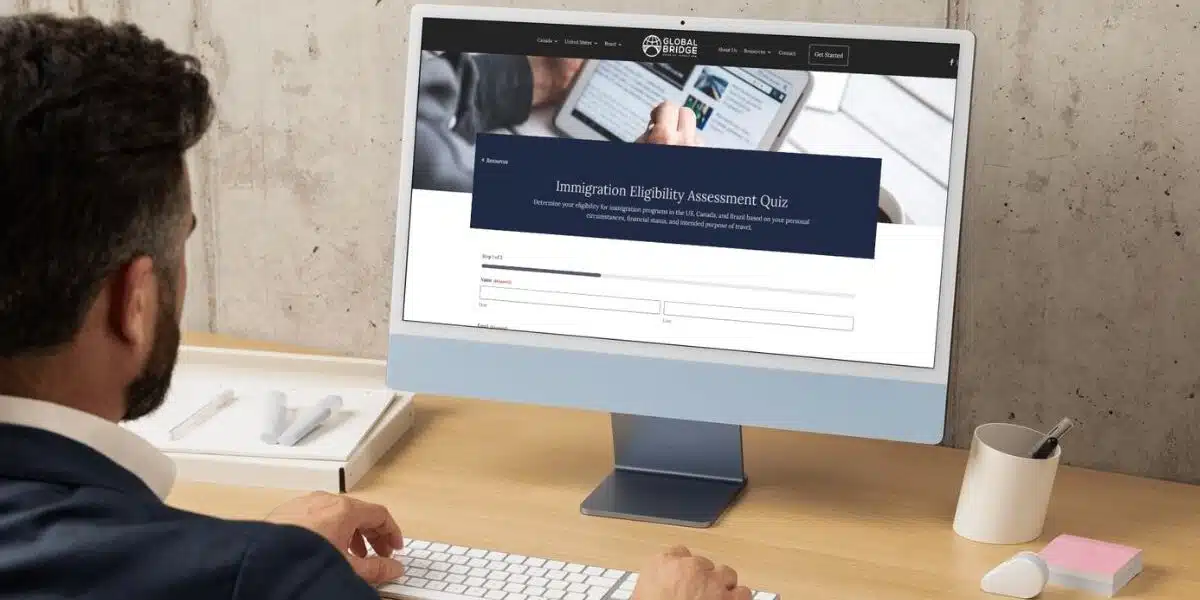
Take the next step: Fill out our free assessment form to explore how the E-2 visa can work for you and your family. Start your journey to living, working, and investing in the United States today.